Services
Hurricane Roof Damage in Tallahassee, Trees and Wind
Tarping and storm inspections across Leon, Gadsden and Wakulla counties after hurricanes, tropical storms and the straight-line winds that bring oaks down.
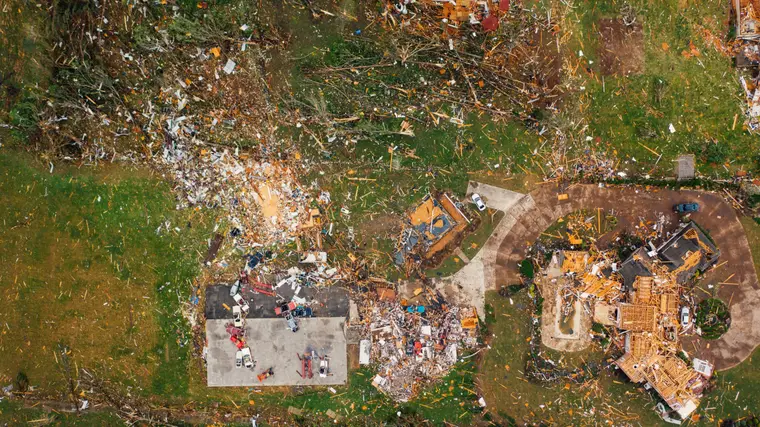
Hurricane damage
Hurricane roof damage in Tallahassee usually arrives on a tree. The wind does its share, lifting shingles and peeling ridge caps, but the worst calls we get after a storm start with an oak, a pine or a heavy limb on the house. That changes what a good storm visit looks like. Stopping the water still comes first, and then the inspection has to go below the shingles, into the attic, to find cracked rafters and split decking that you can’t see from the yard.
Storms in the Big Bend
The Big Bend gets more than its share of weather. Hurricane Hermine came ashore just east of St. Marks and brought down trees across Tallahassee. Hurricane Michael’s winds tore through Gadsden County well inland. Between the named storms, summer thunderstorms, straight-line winds and the odd tornado drop limbs on roofs every year. A tall canopy is one of the best things about living here, and it’s also the main reason a roof gets hurt in bad weather.
What we do after a storm
Stop the water
If water is coming in, we tarp the opening. The tarp runs over the ridge where it can, is fastened with wood battens screwed through to the deck, and is lapped so rain runs over it instead of under it. Before anything is covered, we photograph the damage from several angles so the record survives the repair.
Check the framing
Where a tree or limb has hit the roof, we go into the attic and look at the rafters, the deck and the ceiling joists below the strike. A cracked rafter has to be sistered or replaced before the roof can be rebuilt over it, and it is far better found now than after the new shingles are on.
Inspect the whole roof
A storm that drops one limb usually loosens others and lifts shingles in places you can’t see. We walk every slope, check the ridge, the valleys, the vents and the flashing, and photograph what we find, including the parts of the roof that came through undamaged.
Write it down
You get a dated photo report and a written description of the damage, slope by slope, plus an itemized price for the repair. It’s written so you can forward it to an insurer or adjuster without rewriting it. See insurance claim paperwork for exactly what’s in the packet.
Repairing the damage
Most storm damage is repaired rather than replaced: new decking and shingles where a limb came through, resealed or replaced shingles where the wind lifted them, new ridge caps, new flashing where it was torn. A roof repair keeps the rest of your roof in service. If the roof was already near the end of its life, or the damage runs across most of it, we’ll explain why a roof replacement may make more sense and let you decide.
Large storm repairs may need a permit, and on older roofs a big enough repair can mean bringing that section of roof up to current code. We check before we quote so there are no surprises.
Before the next storm
A little preparation goes a long way under a canopy:
- Trim the limbs over the roof. Branches that overhang the house are the ones most likely to come down on it. A tree service can thin or shorten them, and we’ll point out the ones that worry us.
- Clear the gutters and valleys. Blocked gutters back water up under the roof edge when the rain gets heavy.
- Take photos of your roof in good weather. A clear record of how the roof looked before a storm makes any later claim easier.
- Know who to call. Save our number, and a tree service’s, before the storm, not after.
Watch out for storm chasers
After a big storm, out-of-town crews knock on doors across the area. Some do fine work and many don’t stay around to honor a warranty. Be wary of anyone who asks you to sign over your insurance benefits on the spot, offers to cover your deductible, or wants a large deposit before a permit is issued. Florida law bars contractors from offering to waive or pay a deductible. Take a breath, get the opening tarped, and get a written price from someone who will still answer the phone next year.
Where we respond
After storms we cover Tallahassee, Quincy and Crawfordville, and the surrounding parts of Leon, Gadsden and Wakulla counties. When the whole region is calling at once, we tarp first, inspect second, and tell you honestly how long the wait is.
Hurricane damage by town
- Hurricane damage in Tallahassee, FLRanch homes and two-stories under live oaks in the older neighborhoods off the canopy roads, where limbs, leaves and shade are part of every roof.
- Hurricane damage in Quincy, FLHistoric houses near the courthouse square and rural homes out toward the county line, many with metal roofs, deep porches and tall pines nearby.
- Hurricane damage in Crawfordville, FLWakulla County homes between the national forest and the coast, with pine needles in the valleys and roofs that meet Gulf storms early.
Questions about hurricane damage
A tree is on my roof. What should I do first?
Get everyone out of the rooms under it, stay away from any downed power lines, and call your power company if lines are involved. Don't climb up. A tree service removes the tree, and we can be there to tarp the opening and photograph the damage as soon as it's off, or coordinate with the tree crew if you don't have one.
Do I have to wait for my insurance adjuster before you tarp?
No. Policies generally expect you to stop further damage, and a tarp does that. We photograph everything before it's covered so the adjuster can still see what happened.
How long is a tarp good for?
A properly fastened tarp, held down with battens rather than just bricks or rope, can keep water out for weeks. It's still a temporary fix, and we schedule the permanent repair as soon as we can.
My roof looks fine from the street. Should I still have it checked?
If the storm brought down limbs in your yard or blew shingles off houses nearby, yes. Lifted shingles, cracked ridge caps and small punctures from branches are hard to see from the ground, and the next rain finds them.