Roof care
Gutters and Gutter Guards Under Oaks and Pines
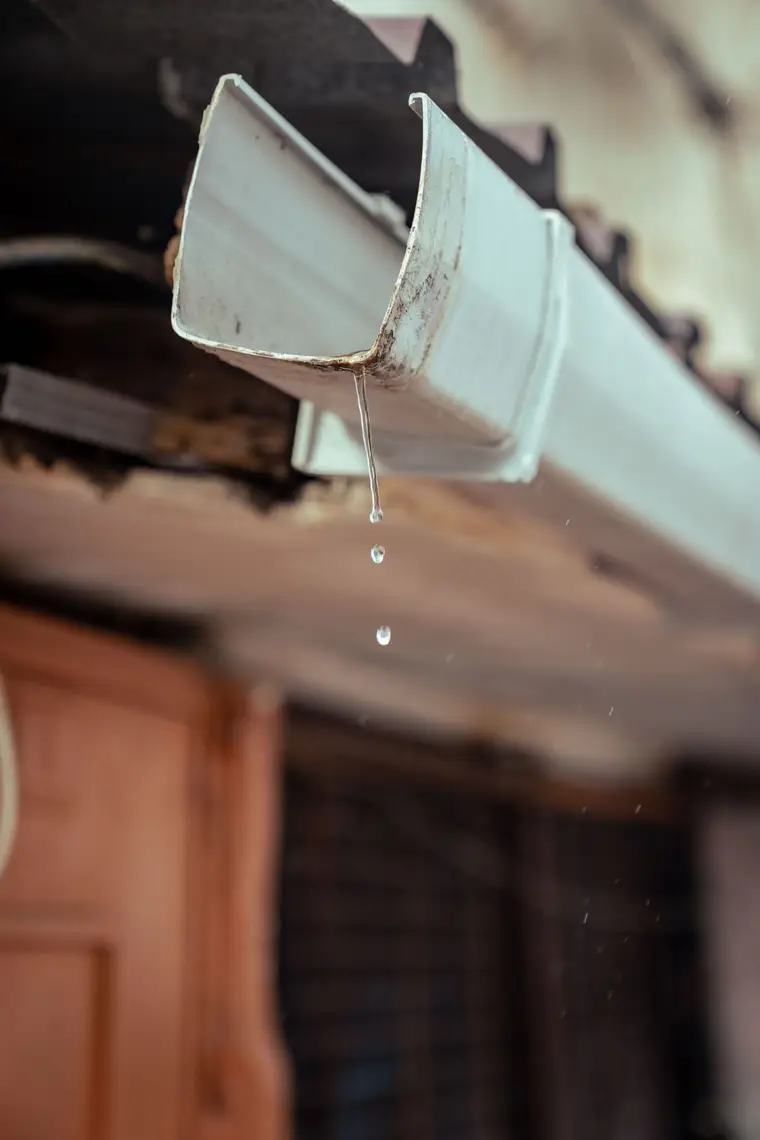
Gutters and gutter guards earn their keep around Tallahassee and down into Wakulla County more than almost anywhere, because so many houses here sit under trees. Live oaks drop leaves and twigs, longleaf and loblolly pines drop needles all year, and spring brings a coat of oak tassels and pollen that turns into sludge in the first rain. A gutter that can’t keep up overflows at the corners, soaks the fascia and backs water up under the edge of the roof. Here’s how we think about the gutter system on a house under trees: what size it should be, which guards cope with needles, and the small details at the roof edge that decide whether any of it works.
What a gutter is actually doing
A gutter collects the water coming off the roof and moves it away from the house. That sounds simple, and on an open lot it mostly is. Under a canopy the gutter has a second job, which is to keep moving water while debris arrives with it. Once leaves and needles pack the bottom of a gutter, it holds water instead of moving it, and the weight of wet debris pulls the hangers loose over time.
When a gutter overflows, the water goes where nobody wants it: over the front edge onto the flower beds and the foundation, or over the back edge, between the gutter and the fascia board. That second path is the one that does the damage. It wets the fascia, the ends of the rafters and the edge of the roof deck every time it rains, and soft wood at the eaves is one of the most common things we find on older houses in this area.
Size matters more under trees
Most houses have a five-inch gutter, which handles ordinary rain on an ordinary roof. Two things push us toward a six-inch gutter here: big roof areas that drain to one corner, and trees. A wider gutter carries more water and gives debris more room before it blocks the flow.
Downspouts matter just as much. A small downspout clogs at the top where it joins the gutter, often with a single wad of needles or a sweetgum ball wedged in the outlet. A larger downspout opening, and more of them on a long run, gives the water somewhere to go even when the gutter is half full of leaves. If one corner of your house always overflows, a missing or undersized downspout is the first thing we check.
The gutter also needs a slight fall toward each downspout, roughly a quarter inch every ten feet. Older gutters often sag in the middle as hangers work loose, and a gutter with a low spot holds a puddle that never drains. That standing water is where mosquitoes breed and where the metal starts to corrode.
The guard types, and how they handle needles
There are four broad kinds of gutter guard, and they behave very differently under pines.
Screens. A perforated or expanded metal sheet that sits over the gutter. Screens stop leaves well, which is why they’re popular. Pine needles are the problem: they slide through the holes point first and lodge there, so the screen ends up stitched with needles and clogs from the inside. Under oaks with few pines, a good screen can be enough. Under longleaf pines, it usually isn’t.
Micro-mesh. A fine stainless mesh stretched over a rigid frame. The openings are small enough that needles can’t get through, and water still passes easily. This is the type we suggest most often for houses under pines. The trade-off is that fine mesh can glaze over with pollen and the grime from oak tassels, so it needs a brush or a rinse a couple of times a year to keep water going through it.
Reverse curve. A solid hood that curves over the gutter, so water follows the curve into a slot while leaves slide off the front. These shed leaves well, but in a heavy downpour water can shoot past the curve, and needles can still get into the slot. They also change the look of the roof edge more than the others.
Inserts. Foam blocks or bristle brushes that sit inside the gutter. They cost little and go in easily, but they hold debris in the gutter rather than keeping it out, and foam that stays wet grows its own crop of seedlings. We rarely recommend them on houses with heavy tree cover.
Whatever the type, the guard has to sit at the right angle and be fastened so it can’t lift in a storm. A guard that’s slid under the first course of shingles can lift those shingles and break their seal, which is why we prefer guards that fasten to the front lip of the gutter and sit below the drip edge.
The roof edge the gutter hangs on
A gutter is only as good as the edge it hangs from. On older homes around here we check three things before talking about gutters at all.
Drip edge. The metal strip along the edge of the roof should send water into the gutter, not behind it. Many older roofs were put on without one, or with a strip that sits too short to reach past the fascia. Water then runs down the face of the fascia board behind the gutter. Adding drip edge is often part of a roof repair along the eaves, and it’s standard on every re-roof we do.
Fascia. If the board the gutter is screwed to is soft, the gutter will pull away no matter how good it is. We probe the fascia along each run and replace the rotten lengths before hanging anything new on them.
Kickout flashing. Where a roof edge runs into a wall, such as a porch roof meeting a two-story wall, a small angled piece of flashing should turn the water out into the gutter. Without it, water runs down the wall behind the siding. Missing kickouts cause some of the most expensive hidden rot we see, and the fix is a small piece of metal.
Where the water goes next
The job isn’t done when the water leaves the downspout. A downspout that empties against the foundation puts all of that roof water in one spot next to the house. Splash blocks, extensions or a short buried line to daylight move it away. On sandy lots near the coast the water soaks in quickly. On the red clay further north, it sits and runs, so the downspout outlet needs to point downhill and away from the slab.
How often to clean, with or without guards
Without guards, a house under heavy canopy usually needs its gutters cleared in late fall after the oaks finish dropping, again in spring after the tassels, and after any storm that brings down limbs. Pine-heavy lots can need more. With micro-mesh guards, most homeowners can get away with brushing the top of the guard a couple of times a year and checking the downspouts after storms.
If you clean your own gutters, work from a ladder that’s tied off or held, not from the roof edge, and never lean the ladder on a guard or a gutter run that’s already loose. On a tall house, or one with a steep roof, it’s worth paying someone to do it.
When we see gutter trouble on an inspection
On every roof inspection we look at the gutters as part of the roof’s drainage: overflow marks on the fascia, rust at the seams, sagging runs, clogged outlets and water marks on the soffit. Around roofing in Crawfordville, where pines lean over most lots, packed needles in the gutters and valleys come up on nearly every visit. We photograph what we find and write down what we’d do, whether that’s clearing a run, adding drip edge or replacing a stretch of soft fascia, so you can decide what to fix and when.
Questions about this guide
Will gutter guards mean I never clean the gutters again?
No. A good guard turns a messy job into a quick one, and it keeps the downspouts from clogging, but leaves and needles still collect on top of the guard and need brushing off. Anyone who sells a guard as maintenance-free is selling the wrong thing.
Can a guard go on my existing gutters?
Usually, if the gutters are sound, hung at the right fall and fastened to solid fascia. If they sag, leak at the seams or pull away from soft wood, it makes more sense to fix that first, or replace the run, than to put a guard on a gutter that's already failing.
Do gutters matter for the roof itself?
Very much. A gutter that overflows soaks the fascia and the edge of the roof deck, and that's where a lot of rot on older houses starts. The gutter is the last part of the roof's drainage, so we look at it on every inspection.