Roof care
Replacing an Old Skylight, or Roofing Over It, in Tallahassee
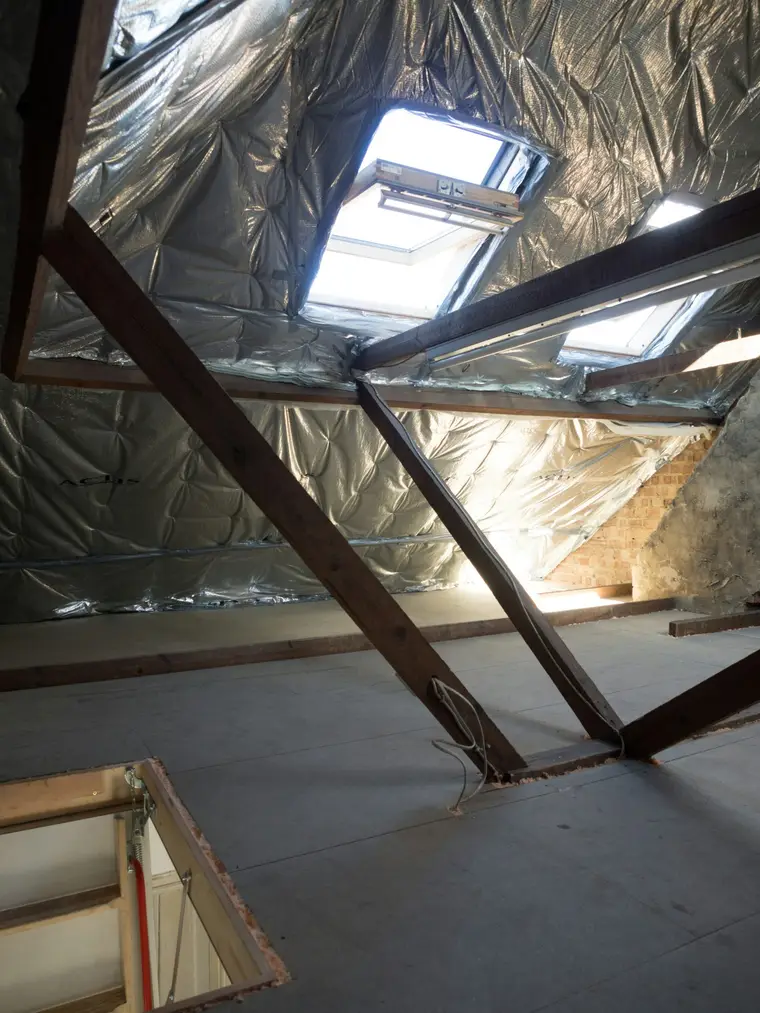
Replacing an old skylight is a question we raise on a lot of re-roofs around Tallahassee, because so many ranch homes and split-levels here got one in the decades when a plastic dome over the kitchen was the thing to have. Many of those skylights are still in place, and plenty of them are past their best: yellowed, cracked at the corners, sealed with layers of roof cement, or dripping on cold mornings. If yours is one of them, a new roof is the best moment to decide its future. Here’s what we look at and how the choices compare.
Why the re-roof is the time to decide
A skylight is a hole in the roof with a window on top, and what keeps the water out is the flashing worked into the shingles around it. When the roof is replaced, that flashing comes off with the old shingles. So whatever happens to the skylight, its flashing gets redone during the re-roof.
That’s why swapping an old skylight at the same time usually costs much less than doing it later. The roof is already open, the crew is already there and the new flashing kit comes with the new unit. Replace the skylight a few years after the roof, and someone has to cut back the newer shingles around it, fit the new unit and patch the roof with shingles that have already faded.
How old skylights fail
The dome. Older skylights are mostly acrylic or polycarbonate bubbles. Years of sun turn the plastic yellow and brittle, then fine cracks spread across it, a pattern called crazing. A falling acorn or a limb can then put a hole straight through it. Once the dome is cracked, there’s no lasting fix short of a new unit.
The seals. Between the dome and the frame are gaskets and sealant that dry out. Water gets in at the corners first and shows up as staining on the frame or the drywall well below it.
The flashing. Many older skylights were installed with a curb, a short wooden box built up off the roof, and flashed with whatever was on the truck that day. Over the years they get patched with roof cement, then patched again. Layers of cement hide the problem rather than fixing it, and they hold water against the wood of the curb.
Condensation. On a cold North Florida morning, warm moist air from the house meets the cold underside of a single-layer dome and turns to water. It runs down the shaft and drips, which looks a lot like a leak. The giveaway is timing: drips on a clear, cold morning with no rain the night before.
Your three choices
Keep it and reflash it
If the skylight is a newer double-glazed unit, the glass is clear, the frame is sound and it doesn’t drip with condensation, it can stay. We take it out of the old flashing, check the curb or the deck around the opening for rot, and fit new step flashing and a new head and sill piece as the new roof goes on. This is the cheapest route, and the right one when the skylight still has real life in it.
Replace it with a new unit
When the dome is cloudy or cracked, or the unit drips every winter, we fit a new skylight in the same opening. Modern units have double-layer glass with a low-emissivity coating, which cuts both the heat coming in on a summer afternoon and the condensation on cold mornings. They come with a matched flashing kit made for the roof type, which takes out the guesswork that caused so many of the old leaks. If the opening needs to change size to fit a standard unit, the framing is adjusted at the same time.
Any new skylight we fit has to be rated for the wind loads where you live, and it’s included on the permit along with the rest of the re-roof.
Remove it and close the opening
Some homeowners have never liked the skylight. It heats the kitchen in summer, it fades the floor, or the room was redone and it no longer suits the space. Removing it is a clean job during a re-roof: the unit comes out, the opening is framed in with lumber matching the roof framing, new decking goes over it and the roof is shingled straight across. Inside, the shaft is closed off and the ceiling is patched and ready for paint.
Once it’s gone, there’s one less place on the roof for water to get in, which counts for a lot on a house under trees where debris piles up behind anything that sticks out of the roof.
A smaller option: tube skylights
If you want daylight without a full skylight, a tubular skylight can bring light into a hall, a bathroom or a closet. A small dome on the roof feeds a reflective tube down to a diffuser in the ceiling. The roof opening is only about the size of a dinner plate, it fits between the rafters without cutting any framing, and it lets in far less heat than a full skylight. They aren’t a window you can look through, but for lighting a dark room they work well.
Under the trees
Skylights on houses under live oaks get two extra problems. The first is debris: leaves, twigs and acorns collect on the uphill side of a skylight curb, where they hold water against the flashing. The second is impact. A heavy limb can break a dome that a shingle would have shrugged off.
If you’re keeping or replacing a skylight under a big oak, we look at how the debris will flow around it and whether a cricket, a small peaked section behind the curb, would help shed water and leaves around the sides. On an older roof that’s what decides whether the skylight stays dry for the life of the new roof.
What it looks like on the estimate
On our written price, a skylight shows up as its own line so you can see what each choice costs: reflash the existing unit, replace it with a named model in a given size, or remove it and deck over. You choose before any material is ordered. The same goes for repairs we find while the skylight is out, such as rotten curb wood or a soft section of deck around the opening. Those are photographed and priced as we go, not discovered on the final bill.
If you’re planning a roof replacement in Tallahassee and there’s a skylight in the middle of it, mention it when you call. On the inspection we’ll look at it from the roof and from inside, and for roofing in Tallahassee under heavy canopy we’ll tell you plainly whether we’d keep it, swap it or close it up, and why.
Questions about this guide
My skylight leaks. Is it the skylight or the roof?
It can be either, and it's often the flashing between them. Water spots on the frame after a windy rain point to the flashing. Drips on a cold morning with no rain point to condensation. Cracks or crazing in the dome point to the skylight itself. We check all three before quoting anything.
Can a skylight be removed and the hole closed up?
Yes. The opening is framed in, new decking goes over it, the roof is shingled to match and the ceiling is patched inside. On a re-roof it's straightforward. On its own, the hardest part is matching the old shingles around it.
Do I have to replace the skylight when I replace the roof?
Not always. A skylight that's sound, sealed and fairly new can stay and get new flashing. An old one usually costs more to work around than to swap, because the flashing is the part that gets replaced either way.